The Diddy trial isn’t just another scandal making headlines—it’s a deeply disturbing reminder of the abuse women have endured behind closed doors for far too long. It’s a reckoning. And yet, even now, in the face of multiple allegations and legal proceedings, public opinion still struggles with the same tired question: “Why did she stay?” or worse, “Why is she coming forward now?”
Let me be clear: this is not just about one man. This is about power, silence, fear, and the culture that too often protects the abuser while blaming the abused.
When Will We Believe Her?
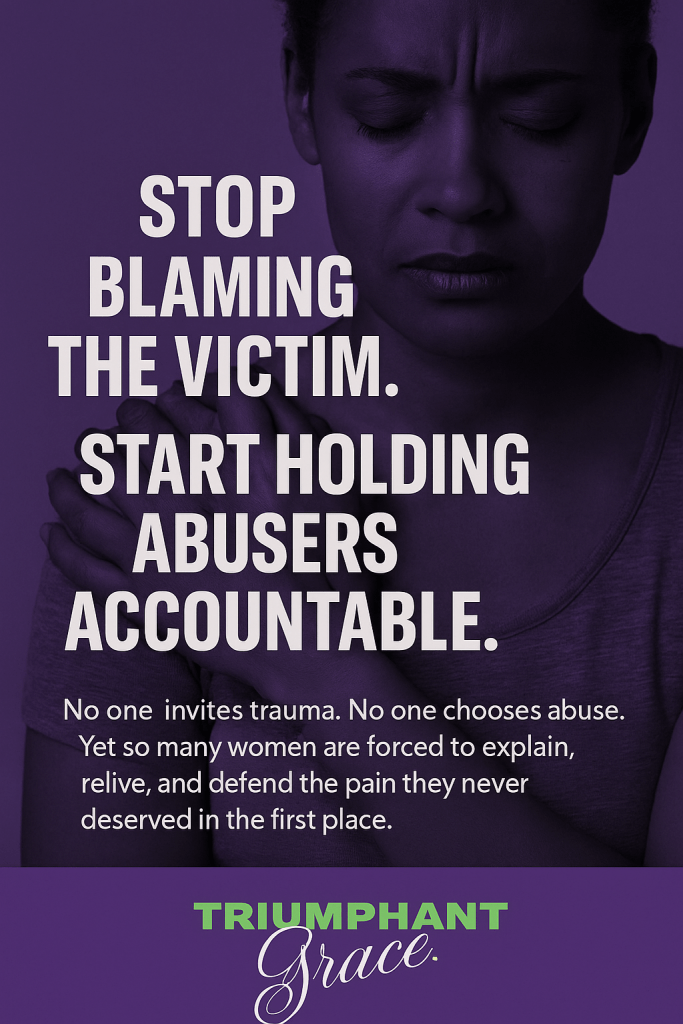
Too many women have been silenced—not just by their abusers but by the shame, scrutiny, and societal disbelief that follows them when they speak out. As I wrote in my original blog post “Stop Blaming the Victim,”:“No one invites trauma. No one chooses abuse. Yet so many women are forced to explain, relive, and defend the pain they never deserved in the first place.”
That line has stayed with me because I lived it. I was abused. I was homeless. I was discarded and dismissed after decades of serving faithfully beside my husband in ministry. And when I tried to find love again, I ended up in a relationship that nearly broke me completely.
I also did not come forward immediately! It was a mix of the psychological barriers that prevented that:
1. Trauma Bonding (also known as Betrayal Bonding)
“He was the only one who made me feel seen, and the one who destroyed me.”
2. Shame and Self-Blame
Victims often internalize the abuse, believing they caused it or somehow deserve it. Society reinforces this by asking:
- “Why didn’t you leave?”
- “What were you wearing?”
- “Are you sure that’s what happened?”
This fuels deep shame and silence.
3. Fear of Retaliation
Many women fear what will happen if they speak out:
- Will he hurt me again?
- Will he go after my children?
- Will I be dragged through the media or legal system?
For some, especially in high-profile or controlling relationships, the fear of consequences is paralyzing.
4. Normalization of Abuse
If a woman grew up in an environment where abuse was common, she may normalize those behaviors. She might not initially recognize the behavior as abuse because it’s what she’s always known.
“I thought it was just how relationships were. He never hit me—so I thought it wasn’t abuse.”
5. Loss of Identity and Confidence
Abuse breaks down a woman’s sense of self. Psychological manipulation, gaslighting, and control can make her doubt her own memory, intuition, and worth.
- “Maybe I’m overreacting.”
- “Maybe he didn’t mean it.”
6. Dependency and Isolation
Abusers often cut off their victims from financial independence, friends, family, or faith communities. Without a support system, leaving can feel like jumping into a void.
7. Lack of Immediate Memory Clarity (Trauma Response)
In moments of trauma, the brain often freezes to survive. Many victims:
- Disassociate
- Experience memory gaps
- Struggle to recall details immediately
This delay is often misinterpreted as lying or exaggeration, when in reality, it’s the brain protecting itself.
8. Religious or Cultural Pressure
Faith teachings, cultural expectations, or community roles can make women feel like speaking up will shame their family, disrespect a spouse, or ruin reputations.
“I was a Pastor’s Widow. I felt I had to protect the church’s image and that of my late husband, even at the cost of my own life. I also had a lot of supporters who followed me. I was too embarrassed to say everything turned left! I also had to make a PLAN to escape.”
9. Hopelessness or Learned Helplessness
Repeated abuse teaches many women that nothing will change, no one will believe them, and they are powerless. Over time, they stop trying to escape.
10. Lack of Trust in Systems
Women of color, immigrants, incarcerated survivors, or women from marginalized communities often fear that police, courts, or mental health systems won’t protect them—or worse, will re-traumatize or criminalize them.
When a woman doesn’t come forward immediately, it’s not because she’s lying or seeking attention. It’s often because she is still surviving. The world must stop asking why she waited and start asking how we can support her now.
So, I speak with full authority when I say: Abuse is never the victim’s fault.
The Shame is Not Hers to Carry
When a woman is abused, her mind and body often go into survival mode. She may minimize what happened, blame herself, protect her abuser, or stay silent because the alternative—being blamed, judged, or not believed—is more terrifying than staying.
Society must stop asking, “Why didn’t she leave?” and start asking, “Why did he abuse her?”
The Power of Speaking Up
Whether you’re famous or not, the cost of speaking out is high. The Diddy trial is showing us in real time that even with public platforms, access to lawyers, and years of evidence, women still face an uphill battle. Now imagine what it’s like for the everyday woman without resources, legal support, or a voice.
But every time one woman speaks out, it makes room for another. That is how change begins.
Let’s Shift the Narrative
We must move from a culture of skepticism to one of support and belief. We must dismantle the systems—both spiritual and societal—that protect abusers and silence the broken.
We are in a moment where accountability is rising, but real justice won’t come until we stop minimizing abuse and stop crucifying women for surviving it.
To every woman reading this:
You are not what happened to you. You are who you’re becoming.
And to the world:
It’s time to stop blaming the victim and start holding the abuser accountable.
Let’s Connect!
If you’re navigating healing, ready to transform your pain into purpose, or need a speaker who will move your audiences…
🌐 Visit: https://denysehturner.com
📩 Email: letschat@ladydrdenyse.com
Dr. Denyse H. Turner
Mental Health Strategist | Keynote Speaker | Trauma Recovery Advocate
 denysehturner.com
You must be logged in to post a comment.